Loading...

Blind spots remain a significant safety challenge for buses and coaches, particularly in urban environments where vehicles frequently interact with pedestrians, cyclists and other road users.
AI-based blind spot detection systems use cameras and image-processing technology to identify potential hazards around a vehicle and provide visual or audible warnings to drivers.
For bus manufacturers and fleet operators, selecting suitable technology requires evaluating detection capabilities, vehicle compatibility, operating conditions and installation requirements.
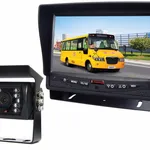
Traditional mirrors and camera monitoring systems improve driver visibility, but they still depend on the driver identifying potential hazards.
AI-based detection systems add an additional layer of assistance by analysing camera images to identify objects such as pedestrians, cyclists and nearby vehicles.
Depending on the system configuration, drivers can receive warnings through:
These functions can be particularly relevant during turning, reversing and low-speed manoeuvres.
When evaluating an AI blind spot detection system, OEMs and operators should consider several factors.
Detection coverage and accuracy
The system should cover relevant blind spots around the vehicle, particularly near doors, front corners and lateral areas.
Manufacturers should provide information about supported object categories, detection distances and performance under different operating conditions.
Warning configuration
Adjustable detection zones allow systems to be configured according to vehicle dimensions and operational requirements.
Warning sensitivity also requires consideration, as excessive false alarms may reduce driver confidence in the system.
Environmental performance
Bus-mounted cameras must operate under varying conditions, including rain, low light, temperature changes and road vibration.
Testing under representative operating conditions is important for evaluating system reliability.
Vehicle integration
Compatibility with existing monitors, recording systems, vehicle electrical architecture and mounting locations can influence installation complexity and maintenance requirements.
MCY Technology provides camera monitoring and intelligent detection systems for commercial vehicles, including buses and coaches.
Its AI blind spot detection camera range includes solutions designed to identify pedestrians, cyclists and vehicles around the vehicle.
According to the manufacturer, selected configurations offer:
MCY also offers A-pillar turning assistance cameras and 360-degree monitoring solutions for commercial vehicle applications.
The appropriate system configuration depends on the vehicle type, intended detection areas and operational requirements.
Driver assistance technology is becoming increasingly relevant to commercial vehicle safety requirements.
UN Regulation No. 159 establishes requirements for moving-off information systems designed to detect pedestrians and cyclists in the forward blind spot of certain vehicle categories, including buses and coaches.
However, not every AI blind spot detection system automatically meets these requirements.
Vehicle manufacturers and operators should verify the applicable regulations, product documentation and approval status before selecting equipment for regulated applications.
AI blind spot detection technology can provide additional information to drivers when manoeuvring in environments shared with vulnerable road users.
For fleet operators, effective implementation involves more than installing cameras. Detection performance, driver training, appropriate warning configuration and routine system maintenance all contribute to reliable operation.
As camera-based assistance technology develops, its integration into bus safety systems will remain an important consideration for OEMs, bodybuilders and operators.