Loading...

Battery thermal management is an important factor in the performance and reliability of electric buses. During operation, battery cells generate heat during charging, discharging and acceleration. If this heat is not controlled, battery efficiency, charging performance and service life can be affected.
A battery liquid cooling system is designed to keep the battery pack within the required temperature range by removing excess heat during vehicle operation. This is especially relevant for electric buses operating in regions with high ambient temperatures or demanding duty cycles.
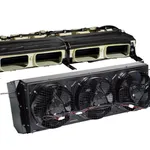
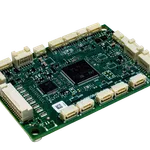
The system typically includes cooling plates, a coolant circulation pump, heat exchanger, chiller, condenser, compressor, temperature sensors and a piping network. Temperature sensors monitor the battery pack in real time and send data to the control system, which adjusts coolant flow according to operating conditions.
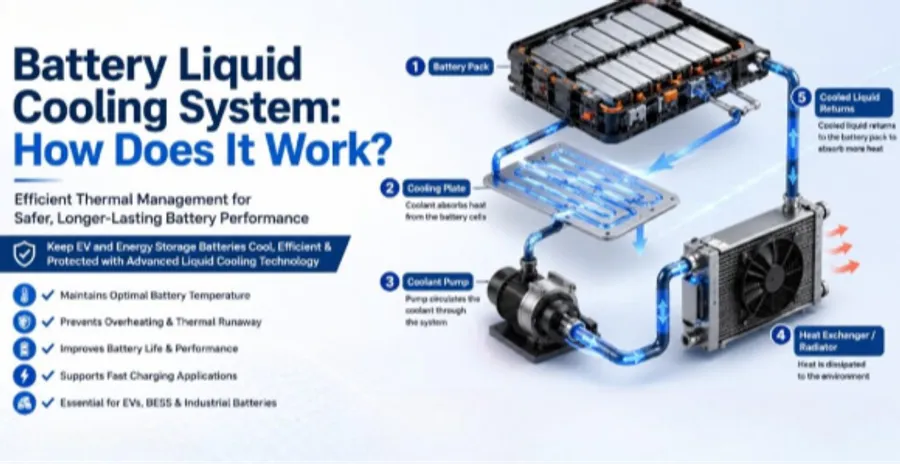
Cooling plates are positioned close to the battery modules. Heat from the battery cells is transferred through the plates to the coolant. The heated coolant then circulates toward the cooling unit, where the chiller transfers heat from the coolant to a refrigerant through a heat exchanger.
After heat is removed from the coolant, the cooled liquid is circulated back toward the battery pack. The collected heat is then rejected through the refrigeration circuit. In this process, the compressor increases the pressure and temperature of the refrigerant vapour, while the condenser releases heat into the ambient air.
For electric bus applications, battery liquid cooling can support stable battery operation, improved thermal control and reduced stress on battery components. These systems are particularly relevant in hot climates, high-frequency urban service and long-distance operations where battery performance and durability are critical.
KRNSPH offers battery liquid cooling systems for electric bus applications, including a 10 kW chiller, multi-flow condenser coil and tube, R134a refrigerant, compact roof-mounted assembly, sight glass with colour indicator and plate-type evaporator for heat exchange.
By managing battery temperature more effectively, liquid cooling systems can contribute to battery reliability, passenger vehicle uptime and consistent electric bus performance.