Loading...

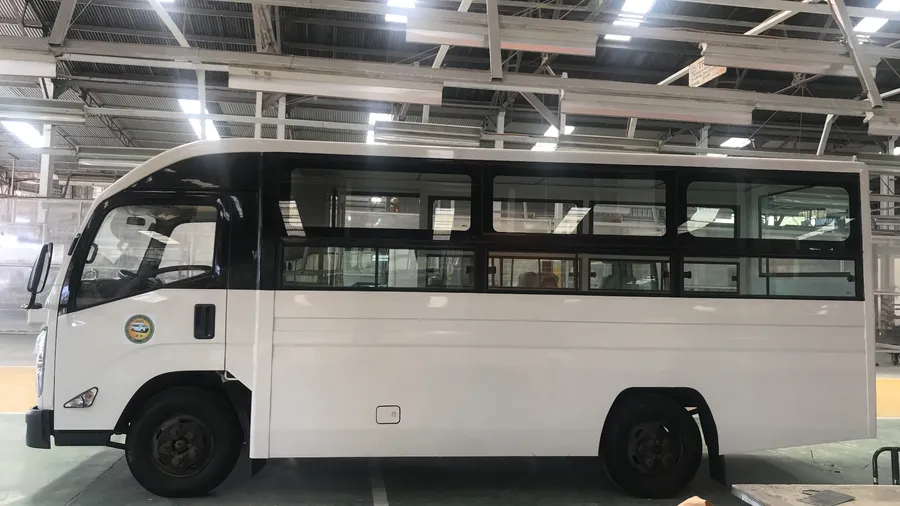
The modernization of public utility vehicles in the Philippines is changing the design and technical requirements of local public transport. As traditional jeepneys are replaced by standardized modern vehicles, passenger comfort, operational reliability and vehicle integration are becoming more important considerations for bodybuilders and fleet operators.
The country’s high temperatures and humidity create demanding operating conditions for vehicle air conditioning systems. Modern jeepneys frequently operate in congested urban environments, with repeated stops, long daily service hours and high passenger loads. HVAC systems must therefore provide consistent cooling while remaining suitable for compact vehicle layouts.
TCHAIN has supplied roof mounted, engine driven air conditioning systems for modern jeepney applications in the Philippines. The systems are intended for passenger vehicles between approximately 5 and 8.5 metres and can be configured according to the vehicle body, passenger capacity, engine and chassis layout.
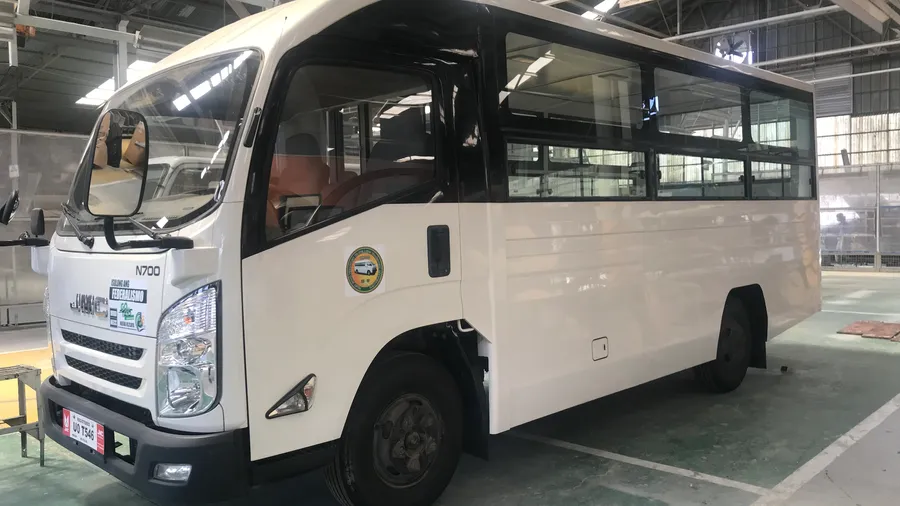
The units have been applied to vehicles based on chassis including the Foton Tornado and Isuzu N700. Final compatibility depends on the complete vehicle configuration, available roof space, engine performance, compressor arrangement and bodybuilder specifications.
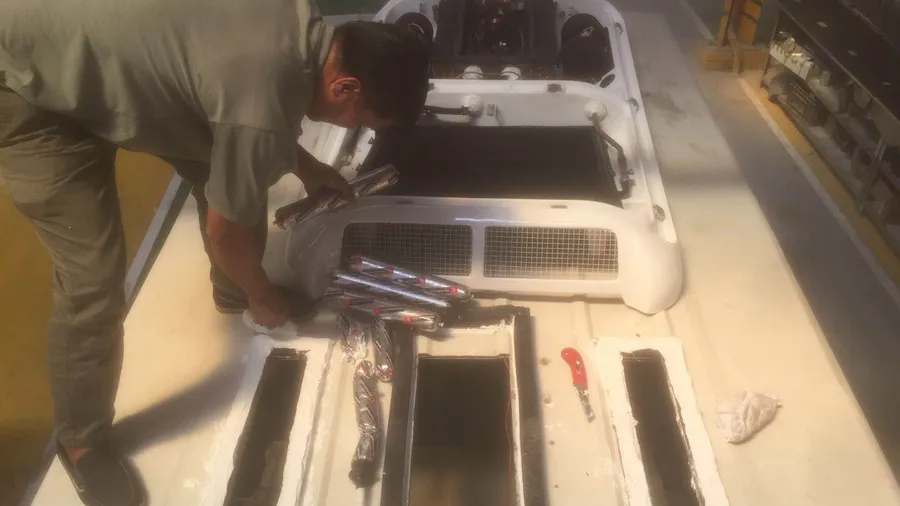
On-site installation of roof-mounted air conditioner on jeepney roof
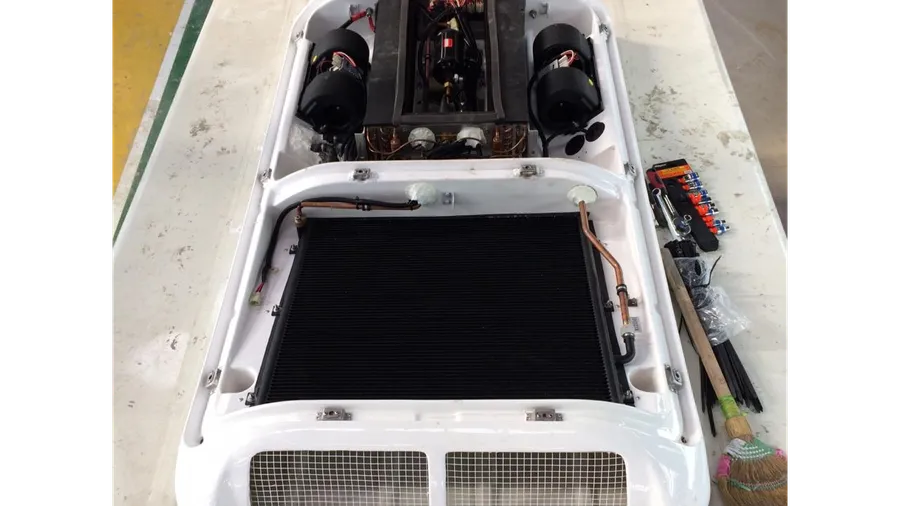
Installing the air conditioning unit on the roof allows bodybuilders to preserve interior space for passengers and vehicle equipment. The compact system layout is particularly relevant for modern jeepneys, where cabin dimensions and passenger capacity must be carefully managed.
The engine driven configuration uses mechanical power from the vehicle engine to operate the compressor. This avoids the need for a separate power source, although cooling performance must be evaluated under different engine speeds, traffic conditions and passenger loads.
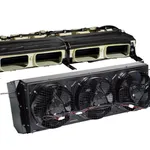
The system includes the main refrigeration components required for cabin cooling, including the compressor, condenser, evaporator, fans, blowers and control system.
Air conditioning systems used in the Philippines must operate under high ambient temperatures, humidity, heavy rainfall and dusty road conditions.
TCHAIN configures its condenser and evaporator systems for tropical operating environments. According to the supplier, the systems are designed to provide cooling at ambient temperatures between 35°C and 45°C.
Actual cabin temperature depends on several factors, including vehicle insulation, door opening frequency, passenger load, solar exposure, airflow distribution and the selected system capacity. These conditions should be evaluated during vehicle design and commissioning.
Corrosion protection is also important in tropical and coastal environments. Exterior housings, heat exchangers, electrical connections and mounting points must be selected and installed to withstand moisture, road contamination and repeated cleaning.
Local bodybuilders install the roof mounted systems as part of the vehicle integration process. TCHAIN provides technical information and installation support for the application.
The installation process typically includes:
• Preparing and reinforcing the roof opening
• Positioning and securing the HVAC unit
• Applying sealing and waterproofing materials
• Connecting refrigerant lines, electrical systems and controls
• Checking airflow distribution inside the passenger cabin
• Testing cooling performance and system pressure
• Inspecting the installation for water ingress and refrigerant leakage
Roof sealing is particularly important in the Philippines due to frequent heavy rainfall. Poor installation can result in water ingress, corrosion, interior damage and reduced system reliability.
A correctly sized and installed air conditioning system can improve thermal comfort for passengers and drivers. It can also support more consistent service quality during periods of high temperature and humidity.
For fleet operators, system selection should consider more than initial cooling capacity. Fuel consumption, compressor load, maintenance access, refrigerant availability, spare parts supply and local technical support can influence the total operating cost of the vehicle.
Preventive maintenance should include regular cleaning of condenser and evaporator coils, inspection of belts and refrigerant connections, checking drainage systems and monitoring cooling performance.
The Philippine public transport modernization process is increasing demand for vehicle systems adapted to local operating conditions. HVAC suppliers, bodybuilders and chassis manufacturers must work together to ensure that the air conditioning system is correctly sized and integrated into each vehicle design.
TCHAIN continues to develop air conditioning and battery thermal management solutions for buses and compact passenger vehicles operating in tropical markets. Its modern jeepney applications demonstrate how roof mounted HVAC systems can be adapted to local vehicle platforms, climate conditions and operational requirements.