Loading...

In the automotive industry, the shift toward electronic control systems continues to accelerate, and one technology now capturing widespread attention is steering by wire. Unlike traditional steering systems that rely on a mechanical column and hydraulic components, steering by wire transmits driver inputs through electronic signals, creating a faster, more precise, and highly adaptable solution.
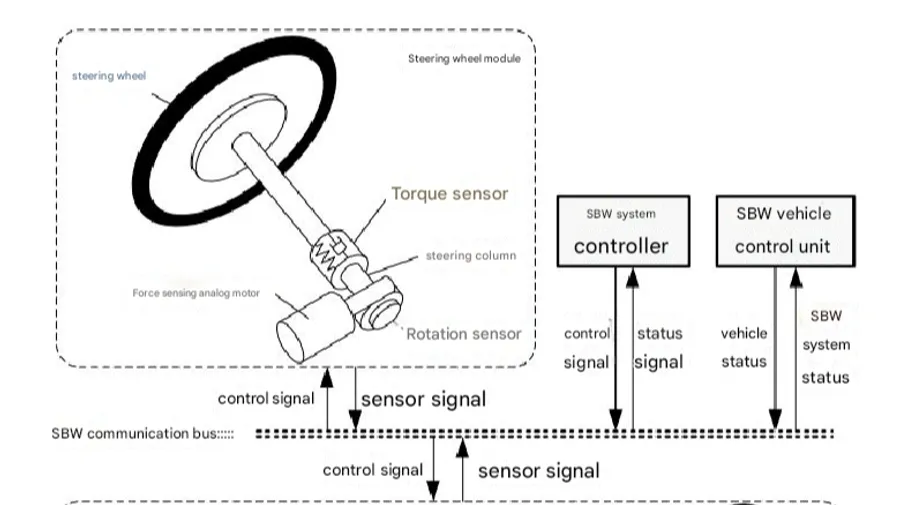
Industry experts highlight that steering by wire not only enhances driving comfort but also opens the door to future mobility solutions. By removing the physical steering shaft, automakers gain greater freedom in cabin design, enabling safer and more flexible vehicle layouts. For drivers, the system delivers smooth steering with real-time road feedback, significantly reducing noise and vibration during operation.
Recent developments also emphasize safety and reliability. Manufacturers are integrating redundancy across critical components—including sensors, ECUs, and motors—to ensure vehicles remain controllable even in rare fault conditions. This redundancy strategy is key for passenger cars as well as heavy-duty commercial vehicles, where steering performance is critical under demanding road environments.
The adoption of steering by wire is also closely tied to the growth of advanced driver assistance and autonomous driving technologies. Because the system is entirely electronic, it integrates seamlessly with automated control systems, making it a core enabler of the next generation of intelligent vehicles.
Industry analysts believe that as regulatory frameworks adapt and consumer confidence grows, steering by wire will see rapid deployment across multiple vehicle platforms. From compact passenger cars to logistics trucks, the system is proving its versatility and value.
With its clear advantages in safety, efficiency, and adaptability, steering by wire is no longer viewed as a concept for the future—it is quickly becoming a practical reality in today’s automotive landscape.