
Loading...
In recent years, the rapid adoption of electric vehicles has brought a new challenge: how to ensure the safety of pedestrians and cyclists in environments where cars move almost silently. To address this, many automakers are turning to the acoustic vehicle alert system (AVAS), a technology that is quickly becoming a safety standard across global markets.
 a
a
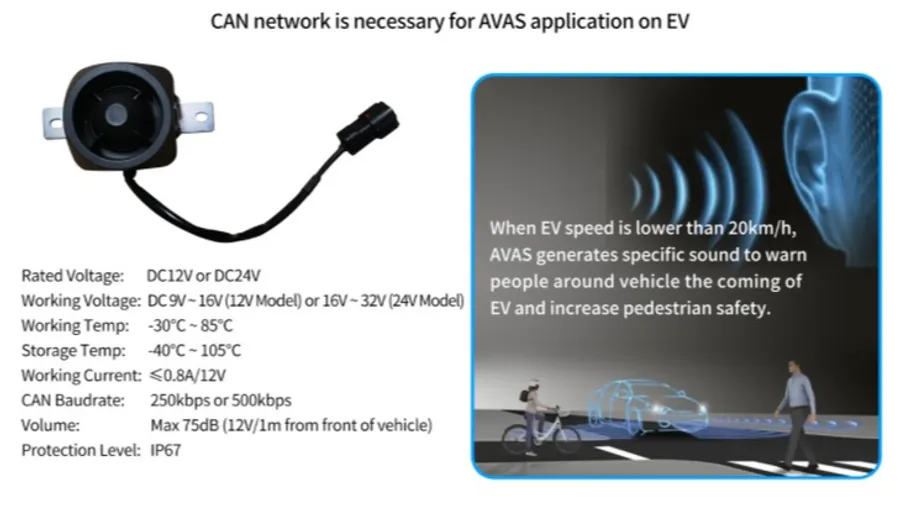
The acoustic vehicle alert system generates artificial sounds when an electric vehicle is traveling at low speeds, usually below 20 km/h. This function is vital in urban streets, parking lots, and residential areas, where quiet EVs can be difficult to detect. By producing a clear and predictable audio signal, the system helps pedestrians recognize an approaching vehicle in time to avoid potential accidents.
 a
a
Industry experts note that international regulations increasingly require electric cars to be equipped with AVAS. Regions such as Europe, North America, and Asia are adopting rules that make pedestrian alert systems mandatory for new EVs. For automakers, integrating an acoustic vehicle alert system not only ensures compliance but also builds consumer trust by prioritizing road safety.
 a
a
The technology has also evolved to meet different needs. Beyond simple alert tones, some systems adjust sound levels based on vehicle speed, while others provide a distinct reverse warning. With IP67-rated housings and energy-efficient designs, today’s solutions are robust enough for long-term use in diverse environments.
As electric mobility continues to expand, the acoustic vehicle alert system is no longer seen as an optional add-on but as a core part of responsible vehicle design. Analysts predict that as urban populations grow and EV adoption rises, demand for AVAS solutions will steadily increase, shaping the future of safer streets worldwide.