Loading...

Purem by Eberspaecher has developed a De Hydrator component designed to improve water management in fuel cell systems, targeting applications in hydrogen powered buses and other heavy duty vehicles. The solution reduces visible steam formation at the exhaust, addressing both operational efficiency and road safety.
Fuel cells generate electrical energy through the reaction of hydrogen and oxygen, producing water vapor as a byproduct. Under low ambient temperatures or high humidity, this can result in visible steam emissions at the tailpipe. The De Hydrator mitigates this through a multi stage process combining heat exchange, condensation, and controlled air recirculation.
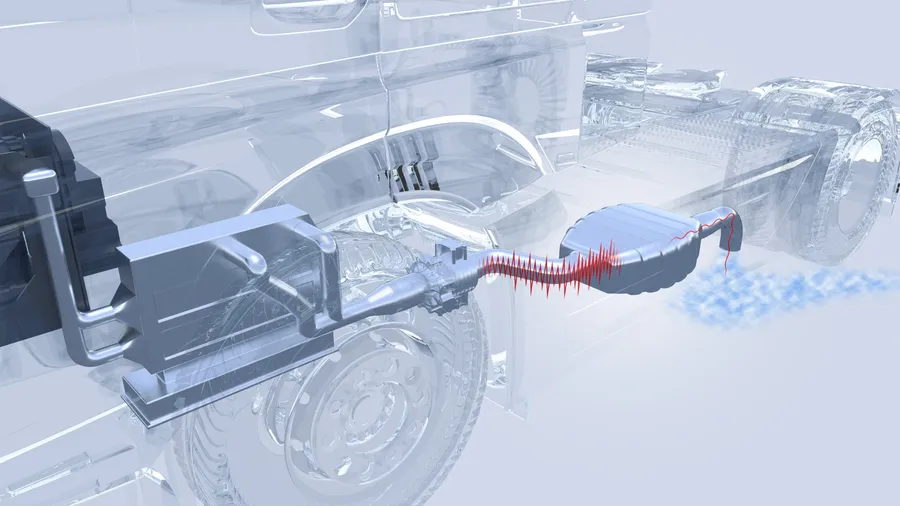
Moisture laden exhaust air is first cooled to condense water, which is then separated within the system. The remaining air is reheated and mixed to reduce relative humidity before being released. This process limits visible emissions and stabilizes exhaust conditions.
The component is part of a modular fuel cell exhaust air system, allowing adaptation to specific vehicle requirements and integration within Balance of Plant architectures. The design leverages flow control and simulation expertise to meet performance and durability requirements in automotive environments.
Validation includes test bench and road testing, carried out in collaboration with RWTH Aachen and an automotive manufacturer. These tests confirm the effectiveness of the system in reducing steam formation under real operating conditions.
Purem by Eberspaecher also integrates in house simulation and testing capabilities to accelerate development and optimize system design for different vehicle platforms.